
Introduction
The hospitality industry is one of the fastest-growing industries in India and across the world. From luxury hotels and airlines to cruise lines and tourism companies, the demand for skilled hospitality professionals is increasing rapidly in 2026. As the travel, tourism, food services, and events industries continue to expand, students are now exploring practical, job-oriented career paths that offer both stability and global opportunities.
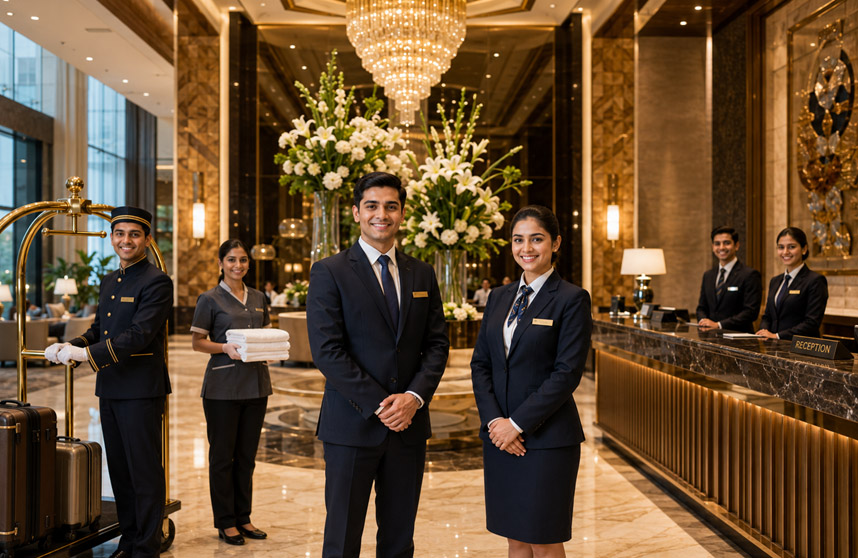
A career in hotel management after 12th has become one of the most attractive choices for students who want a dynamic, people-focused, and professionally rewarding future. Unlike traditional degree programs, hotel management combines practical training with real-world exposure, helping students become industry-ready from the beginning.
Today’s students are looking for careers that offer:
- Practical learning
- Faster employment opportunities
- International exposure
- Skill-based education
- Personality development
- Entrepreneurial growth
This is why hotel management courses after 12th are gaining popularity among Arts, Commerce, and Science students alike.
Institutes like GB Pant IHM are helping students prepare for the hospitality industry through industry-oriented programs, practical training, internships, and professional skill development.
What is a Hotel Management Course?
A hotel management course is a professional hospitality education program that trains students in hotel operations, customer service, food production, and tourism.
These programs combine:
- Theoretical education
- Practical kitchen training
- Industrial exposure
- Communication development
- Customer handling skills
- Leadership training
Students pursuing hospitality management courses learn how hotels, resorts, restaurants, airlines, and tourism businesses operate professionally.
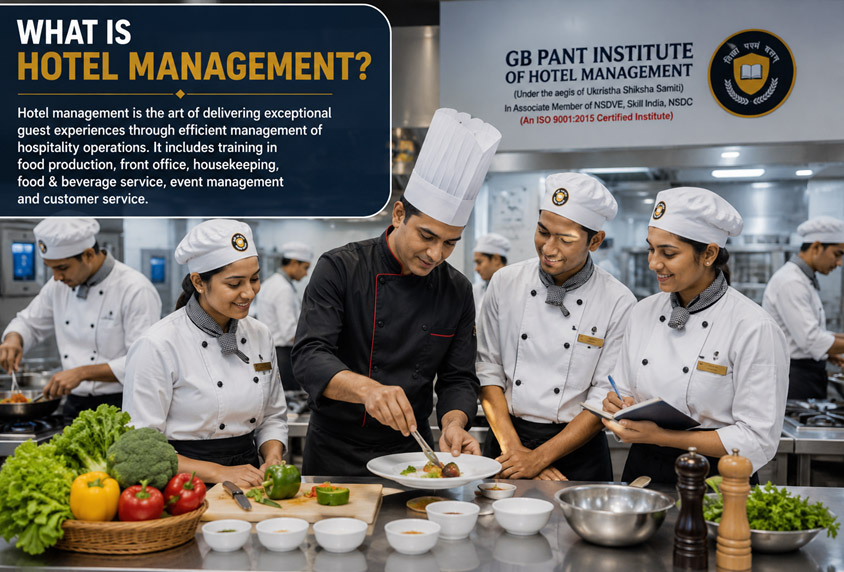
Core Areas Covered in Hotel Management
Front Office Management
Students learn guest handling, reservations, customer communication, and hotel reception operations.
Food Production
This area focuses on culinary skills, kitchen management, hygiene, and food preparation techniques.
Housekeeping
Students are trained in room management, cleanliness standards, hospitality presentation, and guest satisfaction.
Food & Beverage Service
This includes restaurant operations, service etiquette, banquet management, and customer experience.
Event Management
Students learn planning, coordination, and execution of corporate and social events.
Hospitality Communication
Communication skills, personality development, grooming, and professional behavior are essential parts of hotel management training.
Importantly, hotel management is not limited to hotels alone. Graduates can build careers in:
- Airlines
- Cruise lines
- Luxury resorts
- Tourism companies
- Event agencies
- Restaurants
- Corporate hospitality
- International hospitality brands
Why Choose Hotel Management Courses After 12th?
The hospitality industry offers excellent career opportunities for students who enjoy interacting with people, managing experiences, and working in dynamic environments.
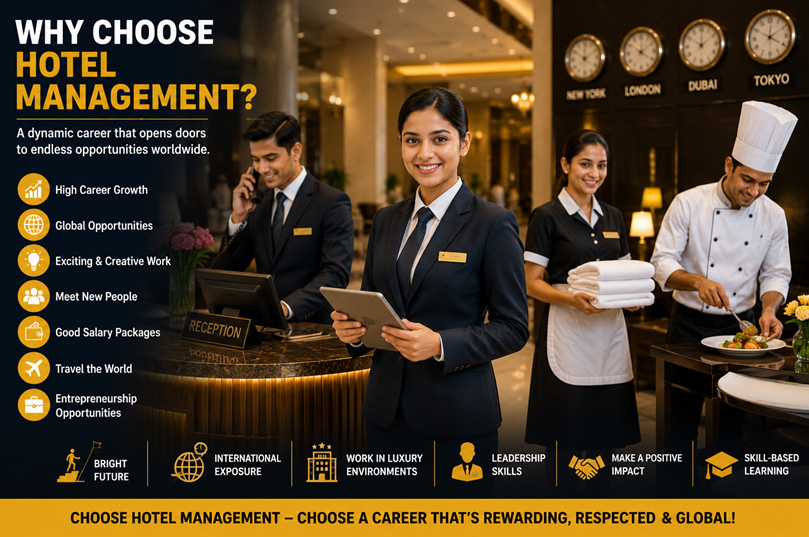
In 2026, the tourism and hospitality sector in India is expected to continue growing due to:
- Increased domestic tourism
- International travel demand
- Expansion of luxury hospitality brands
- Growth of food and beverage businesses
- Rising event and wedding industries
Because of this growth, hotel management jobs are becoming more diverse and rewarding.
Benefits of Choosing Hotel Management
- Creative and exciting career path
- Excellent personality development
- Fast employment opportunities
- International work opportunities
- Exposure to luxury industries
- Opportunities to start your own business
- Strong career growth potential
Industry Trends in 2026
The hospitality industry is evolving rapidly, with technology and customer experience becoming major priorities. Employers now prefer professionals who possess:
- Practical operational skills
- Communication abilities
- Customer service expertise
- Leadership qualities
- Problem-solving skills
This makes skill-based hotel management education more important than ever before.
Hotel Management Course Details After 12th
Students can choose from different types of hotel management programs based on their career goals, duration preferences, and budget.
Types of Hotel Management Courses
Degree Courses
BHM (Bachelor’s in Hotel Management)
A full-time professional degree focused on advanced hospitality operations and management.
BVOC in Hotel Management
A skill-oriented degree program that combines academics with practical industry training.
BSc Hospitality
Focuses on hospitality science, tourism operations, and hotel administration.
Diploma Courses
Diploma in Hotel Management
One of the most popular professional programs for students seeking practical training and quick job opportunities.
Diploma in Food Production
Specialized course for students interested in culinary and kitchen careers.
Certificate Courses
Short-term hospitality certification programs designed for basic hospitality skills and entry-level employment.
Comparison Table of Hotel Management Courses
| Course Type | Duration | Career Scope | Best For |
| Certificate Course | 6–12 Months | Entry-level jobs | Quick skill learning |
| Diploma in Hotel Management | 1–2 Years | Operations & hospitality jobs | Practical learners |
| Degree in Hotel Management | 3–4 Years | Management & leadership roles | Long-term career growth |
| Master’s in Hotel Management | 2 Years | Advanced hospitality careers | Higher specialization |
Hotel Management Course Eligibility
One of the major advantages of hospitality education is that students from all streams can apply.
Basic Eligibility Criteria
- 10+2 from a recognized board
- Arts, Commerce, and Science students are eligible
- Minimum marks may vary by institute
- Basic English communication skills preferred
Some institutes may conduct:
- Personal interviews
- Aptitude tests
- Entrance exams
Eligibility at GB Pant IHM
| Program | Eligibility |
| Diploma in Hotel Management | 10+2 with a minimum 45% |
| Degree in Hotel Management (BVOC-H.M) | 10+2 with a minimum 45% |
| Certificate Programs | 10th with a minimum 45% |
This flexibility allows many students to begin their career in hotel management after 12th without complicated admission procedures.
Hotel Management Courses After 12th Fees
The cost of hotel management education depends on:
- Institute type
- Course duration
- Infrastructure
- Internship opportunities
- Practical facilities
Approximate Fee Structure in India
| Course Type | Approximate Fees |
| Certificate Courses | ₹30,000 – ₹80,000 |
| Diploma Courses | ₹60,000 – ₹1.5 lakh |
| Degree Courses | ₹2 lakh – ₹5 lakh |
Government institutes generally have lower fees, while private institutes may offer advanced infrastructure and international exposure.
However, students should focus on:
- Placement support
- Practical learning
- Internship quality
- Industry exposure
- Faculty experience
A quality institute often provides better return on investment through strong placements and career support.
Career Opportunities After a Hotel Management Course
One of the biggest advantages of hospitality education is the wide range of career options available across industries.
Popular Hotel Management Jobs
Hotel Manager
Responsible for overall hotel operations, staff management, customer service, and revenue performance.
Chef
Professional chefs specialize in food preparation, menu planning, and culinary creativity.
Front Office Executive
Handles guest reception, bookings, customer interaction, and hospitality coordination.
Event Manager
Plans and executes corporate events, weddings, conferences, and hospitality functions.
Food & Beverage Manager
Supervises restaurant operations, food service quality, and customer experience.
Cruise Staff
Works in luxury cruise hospitality departments, including guest service, dining, and housekeeping.
Airline Hospitality Staff
Hospitality graduates can work in cabin crew support, airport lounges, and customer service operations.
Resort Operations Executive
Manages resort guest experiences, accommodation services, and recreational hospitality.
Restaurant Manager
Handles restaurant administration, customer service, and business operations.
Travel Consultant
Assists travelers with tourism planning, bookings, and travel experiences.
Luxury Hospitality Executive
Works with premium hospitality brands delivering elite customer experiences.
Careers in India
India’s hospitality sector is expanding rapidly due to tourism growth, destination weddings, luxury travel, and business tourism.
Major employers include:
- Five-star hotels
- Resort chains
- Restaurants
- Tourism companies
- Event agencies
- Airline companies
Popular hospitality brands recruit trained graduates regularly for operational and management roles.
International Opportunities
One major advantage of hospitality industry careers is global mobility.
Countries offering opportunities include:
- UAE
- Canada
- Australia
- Singapore
- Maldives
- United Kingdom
International hospitality jobs often provide:
- Higher salaries
- Multicultural exposure
- Career advancement
- Global work experience
Entrepreneurship Opportunities
Many hotel management graduates also become entrepreneurs by starting:
- Cafés
- Restaurants
- Catering businesses
- Event companies
- Bakery brands
- Travel services
Hospitality education develops business management and customer service skills essential for entrepreneurship.
Hotel Management Courses After 12th Salary
Salary depends on:
- Institute quality
- Internship experience
- Communication skills
- Technical expertise
- International exposure
Hotel Management Salary Table
| Job Role | Starting Salary | Experienced Salary |
| Front Office Executive | ₹2.5 – ₹4 LPA | ₹5 – ₹8 LPA |
| Chef | ₹3 – ₹5 LPA | ₹8 – ₹15 LPA |
| Hotel Manager | ₹4 – ₹6 LPA | ₹10 – ₹25 LPA |
| Event Manager | ₹3 – ₹5 LPA | ₹8 – ₹18 LPA |
| Cruise Hospitality Staff | ₹5 – ₹8 LPA | ₹12 – ₹25 LPA |
| Resort Executive | ₹3 – ₹5 LPA | ₹7 – ₹15 LPA |
International hospitality professionals may earn significantly higher salaries depending on the country and experience.
How GB Pant IHM Supports Hotel Management Students
GB Pant Institute of Hotel Management is emerging as a recognized hotel management institute in Uttarakhand, focused on skill-based hospitality education.
Located in Haldwani, the institute emphasizes practical training and real-world hospitality exposure for students.
Key Features of GB Pant IHM
- Industry-oriented curriculum
- Practical kitchen training
- Personality development sessions
- Communication skill enhancement
- Internship opportunities
- Hospitality workshops
- Industrial visits
- Excursions and field learning
- Career guidance support
- Experienced faculty mentorship
The institute focuses on preparing students for modern hospitality industry demands through hands-on learning and professional exposure.
Programs Offered at GB Pant IHM Training Centers
According to the official Programs Offered section, the institute provides multiple hospitality-focused programs.
| Program Name | Duration | Eligibility |
| Diploma in Hotel Management | 18 Months | 10+2 with 45% |
| Degree in Hotel Management (BVOC-H.M) | 3 Years | 10+2 with 45% |
| Certificate in Hotel Management | 12 Months | 10th with 45% |
| Master’s in Hotel Management (MVOC-H.M) | 2 Years | Graduation |
| Diploma in Retail Management | 18 Months | 10+2 |
Students can explore these programs through the official Programs Offered Page – GB Pant IHM.
Program Offered with GB Pant IHM
The programs are designed to develop both technical and professional skills required in hospitality careers.
Key Training Components
- Industrial training programs
- Communication skill development
- Practical kitchen sessions
- Hotel operations exposure
- Hospitality workshops
- Career counseling
- Personality grooming
- Customer service training
The institute also organizes industrial visits and educational excursions to provide students with a real-world hospitality understanding.
This practical exposure helps students become more confident and industry-ready.
Final Thoughts
The hospitality industry is becoming one of the most promising career sectors for students after Class 12. With growing tourism, luxury travel, food industries, and international hospitality demand, the future of hotel management careers looks highly rewarding in 2026 and beyond.
Choosing the right institute plays a major role in career success. Students should focus on:
- Practical training
- Industry exposure
- Internship opportunities
- Skill development
- Communication training
A professional and skill-focused education can open doors to careers in hotels, airlines, cruises, tourism, restaurants, and global hospitality brands.
Institutes like GB Pant IHM are helping students build hospitality careers through practical learning and industry-oriented education.
For students seeking a creative, people-oriented, and globally relevant profession, hotel management can be an excellent career path after 12th grade.
Frequently Asked Questions (FAQs)
1. Is hotel management a good career after 12th?
Yes, hotel management offers strong career growth, international opportunities, and diverse job roles in the hospitality industry.
2. Which course is best in hotel management?
The best course depends on career goals. Degree programs are suitable for long-term management careers, while diploma programs offer faster employment opportunities.
3. What is the salary after hotel management?
Freshers can earn between ₹2.5–₹5 LPA, while experienced professionals can earn much higher salaries, especially internationally.
4. Can Arts students do hotel management?
Yes, Arts, Commerce, and Science students are all eligible for most hotel management courses.
5. What is the duration of hotel management courses?
Certificate programs usually last 6–12 months, diploma courses 1–2 years, and degree programs 3–4 years.
6. Is hotel management difficult?
Hotel management requires dedication, communication skills, and practical learning, but it is manageable for students interested in hospitality.
7. What are the fees for hotel management courses?
Fees range from ₹30,000 for certificate courses to ₹5 lakh for professional degree programs.
8. Can I get jobs abroad after hotel management?
Yes, hospitality professionals are in demand globally across hotels, airlines, resorts, and the cruise industry.
9. Which skills are important in hospitality industry careers?
Communication, customer service, teamwork, leadership, grooming, and problem-solving are highly important.
10. Why choose GB Pant IHM?
GB Pant IHM focuses on practical hospitality education, internships, personality development, industrial visits, and skill-based learning.




